A friend of mine was a fitness stud in college. He was in the military. He completed grueling endurance events. He was a formidable weightlifter. He was doing CrossFit before CrossFit was popular. After a night of too much fun, he’d wake up before sunrise and go on 20-mile hikes with a backpack loaded with weights, and return home ready to do it all over again the next day. Fitness was a part of the image everybody saw, and his accomplishments were beyond doubt.
That was over 10 years ago. Last year he called me and told me he’d been following a new fitness program and was seeing endurance improvements unlike anything he’d experienced before. Then he launched into a passionate rant about how much time he’d wasted over the years training the wrong way. He went on, torturing himself with thoughts of how much more endurance growth he could have experienced if all the time and effort he’d committed over the years had been put to use in this more effective method.
For years, his fitness accomplishments were beyond satisfactory. Once he became aware of what was achievable, that same performance was a nagging source of regret.
His realization crystalized the distinction between defining success as the achievement of a fixed goal, versus defining success as the achievement of potential.
We’ve spoken a few times about this training program since then, and the conversation always circles back to the same masochistic reflection of ‘how much more I could have accomplished if I’d only started sooner.‘
Success can be a powerful blindfold. After experiencing some level of accomplishment, the natural reactions are often feelings of gratification and pride, a desire to celebrate, and a return to the process that led to success. It’s more difficult – unnatural most of the time – to pause after accomplishment, look through a critical lens, and reflect on how much opportunity remains untapped.
Occasionally people are able to look past celebration and instead focus on the remaining distance to their potential, and history has produced some amazing stories with those characters.
Eldrick ‘Tiger’ Woods
In April 1997 Tiger Woods competed in his first major tournament, the Masters. Not only did he win, he won by a record 12 strokes. He was ranked the #2 professional golfer in the world.
Although his performance had been exceptional, Tiger saw room for improvement. He noticed the efficacy of his swing was contingent upon his hips and arms being perfectly in sync. When the coordination was just right, his swing rivaled magic. When the coordination was just slightly off, his arms would lag his hips, the club face would open, and the ball would break right. It was a weak link in his game that couldn’t be relied upon, and one he was determined to strengthen. So, two months after winning the Masters, Tiger decided to start over. He tore down his swing, determined to rebuild it stronger.
Retraining one’s body to swing a golf club with new technique is a remarkably difficult task. For professionals, who have committed a technique to muscle memory through thousands upon thousands of swings over decades, it’s often impossible. It took Tiger Woods almost two years to retrain his body to embrace a new technique, but in May 1999, he had done it. In Stroke of Madness, Scott Eden writes:
Over the course of that season, he would win eight PGA Tour events. He would win nine more the next season, including a 15-stroke victory at the U.S. Open, the first of four straight major wins. He would, over a span of seven years, make 142 consecutive cuts, perhaps the most unbreakable record in golf. He would win four straight money titles. Five consecutive scoring titles. Harmon, at the time, would say of Tiger in the book Raising the Bar, ‘The mechanics have gotten so good. His set-up posture is perfect, the plane of his swing is perfect … Everything about it is textbook. Some players get in a zone, play good for a while, but they never swing like Tiger’s swinging now.’ When asked what, if anything, Woods might change, Harmon would reply, ‘The only thing I’d change right now if I were Tiger is the route I took to the bank.’
Former #1 ranked golfer Greg Norman would say, “I thought the way he swung in 2000 was the purest I’ve ever seen him swing the golf club.” Be that as it may, by 2004 a knee injury would interfere, and Tiger’s revamped, perfect swing would no longer be sustainable. Now, reaching his potential would require changing his swing yet again. So, he did. In March 2004, while ranked #1 in the world, Tiger decided to scrap his swing again and rebuild it for a second time.
Over the next six years, Tiger competed in 91 tour events and won 31. In August 2010 he was ranked #1 in the world. Then, he changed his swing a third time.
Today, Tiger Woods is in the World Golf Hall of Fame, shares the record for the most PGA Tour wins (82), and in 2000, Tiger recorded the lowest scoring average in PGA Tour history.
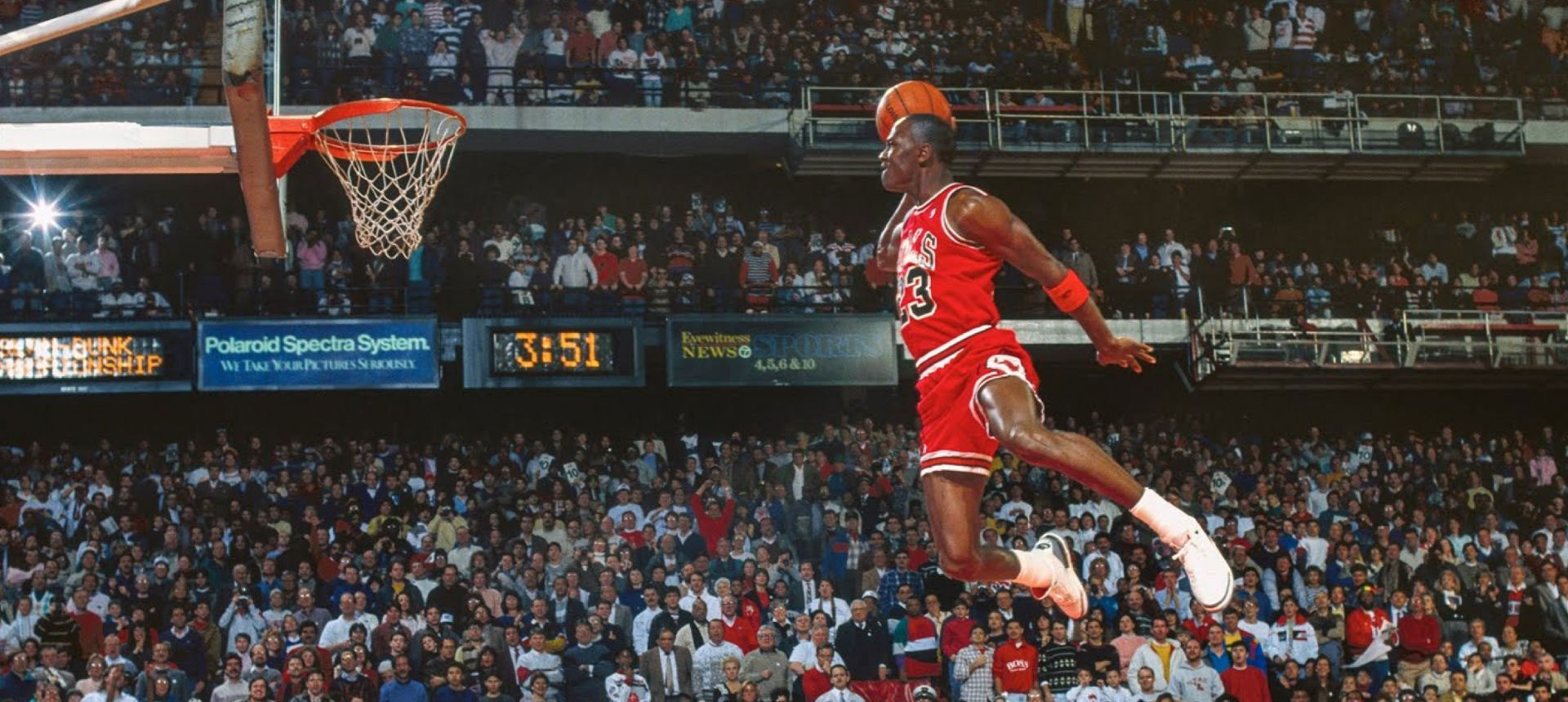
Michael Jordan
Michael Jordan was drafted into the NBA in 1984.
He was named Rookie of the Year in 1985.
He was named an NBA All-Star every year between 1985 and 1989.
He was named the MVP of the All-Star game in 1988.
He was named MVP of the NBA in 1988.
He was named Defensive Player of the Year in 1988.
He was named the Steals Leader in 1988.
He was the NBA’s scoring champion every year between 1987 and 1989.
He won the Slam Dunk contest in 1987 and 1988.
By 1990 Michael Jordan had won every major individual performance title in the NBA. It was hard to dispute that he was the best player in the league. But he hadn’t won an NBA Championship.
In 1989, the Chicago Bulls replaced head coach Doug Collins with Phil Jackson. Jackson famously instituted the “triangle offense”, a style of play that sacrificed individual exceptionalism in favor of teamwork. Jordan, the most dominant individual in the NBA at the time, was admittedly reluctant to adjust. In ESPN’s The Last Dance, Jordan confesses:
I wasn’t a Phil Jackson fan, you know, when he first came in, because he was coming in to take the ball out of my hands. Doug put the ball in my hands … everybody has the opportunity to touch the ball, but I didn’t want Bill Cartwright to have the ball with five seconds left. That’s not equal-opportunity offense. That’s f***ing bulls**t.
While the pain of relinquishing control was aggravating, Jordan’s desire to become an NBA champion was stronger. Prior to Jackson’s promotion to head coach, the Bulls had tasted playoff success and even reached the Eastern Conference Finals in 1989, but hadn’t been able to go any further. Jordan knew that if he wanted to go all the way, he had to adjust. In an interview, Jordan shared:
I’m not going to be the type of person who’s very hungry to lead the league in scoring once again, or to chase individual accolades. Right now I’m more or less geared towards the team’s success.
The Bulls returned to the Eastern Conference Finals in 1990 and pushed the series with the reigning champion Detroit Pistons to a seventh game. Scottie Pippen would be sidelined with a migraine and the Bulls would lose once again. However, with the Triangle Offense up-and-running, they would return in 1991 and not only defeat the Pistons in the Eastern Conference Finals, but ignite a run of dominance in the NBA that hasn’t been challenged since, winning six of the next eight NBA Finals Championships.
Michael Jordan continued to stack individual accolades, chief among which: being widely considered the greatest basketball player of all time.
After success, it’s very natural to pat oneself on the back, accept external praise, rinse and repeat. It’s much more difficult to instead evaluate how much room for improvement still remains.
Sports may offer the most entertaining manifestation, but this happens everywhere. We see it in our line of work all the time:
- Folks have done a wonderful job earning income and saving – but cash flow analysis reveals how much more could easily have been invested, and was instead needlessly left sitting on the sidelines earning nothing.
- Folks have done a wonderful job getting dollars invested – but they overlooked opportunities to capitalize on the tax advantaged accounts available to them, wasting opportunities to build after-tax wealth.
- Folks have performed well versus their benchmark of choice – but they’ve chosen the wrong benchmark, and performance versus the right one is disappointing.
The list goes on.
Accomplishments shouldn’t be overlooked, and deserved celebration should be thoroughly enjoyed. It’s also often worthwhile to reroute at least some of the attention devoted to celebration to instead evaluate how to leave a bit less opportunity on the table.
